تاریخ انتشار: 1400/03/12

Medical Imaging

Medical Imaging

Medical Imaging

In this article, we will study the techniques and methods of medical imaging for the human body. Although animal imaging is also one of the most widely used branches in research and development, this article will not be very attractive. Medical imaging is one of the main bioelectric subfields of bioengineering that explains each one in a concise. The list of contents of this topic can be sorted as follows: 1- Introduction to Biomedical Engineering 2- Medical Imaging 3- Medical imaging techniques 4. Medical imaging devices and systems
1.4 Radiography 4.2 Magnetic Resonance Imaging (MRI) 4.3 Nuclear Medicine Imaging 4-4- Ultrasound Imaging 4.5 Tomography Imaging or CT Scan 4.6. Photoacoustic Imaging 4-7- Elastography imaging 4.8 Echocardiography Imaging 4.9 Angiography Imaging 4.10. Infrared Imaging

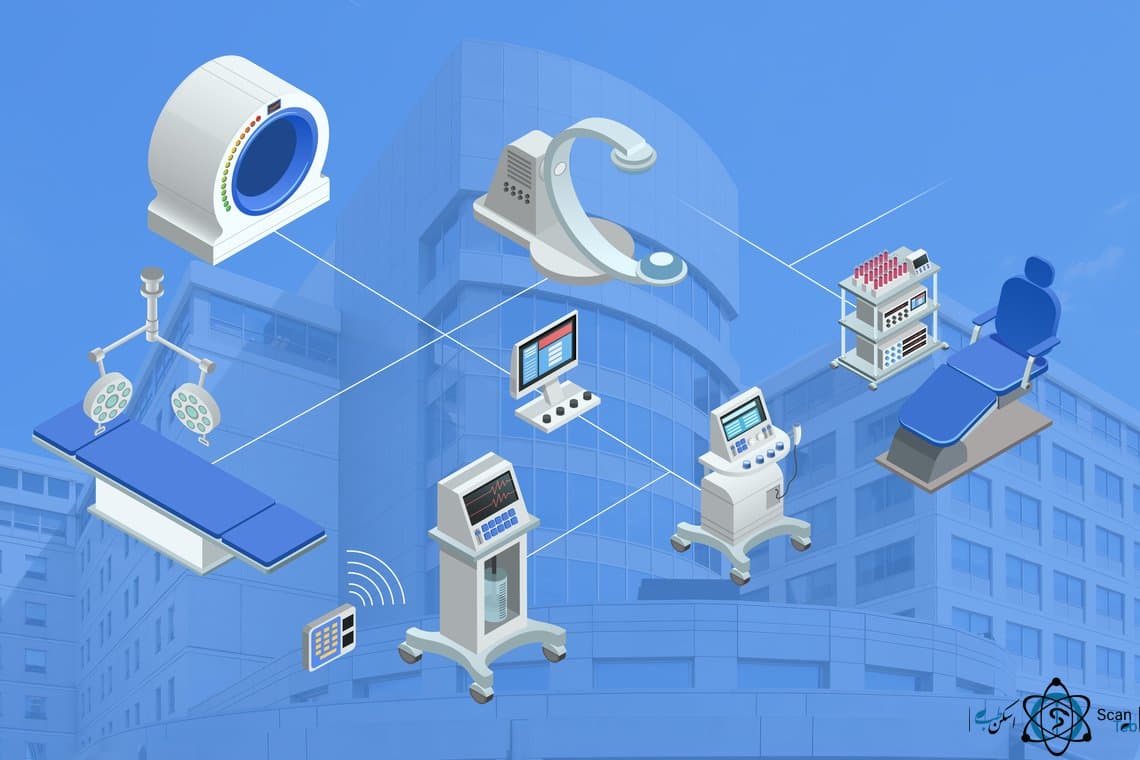
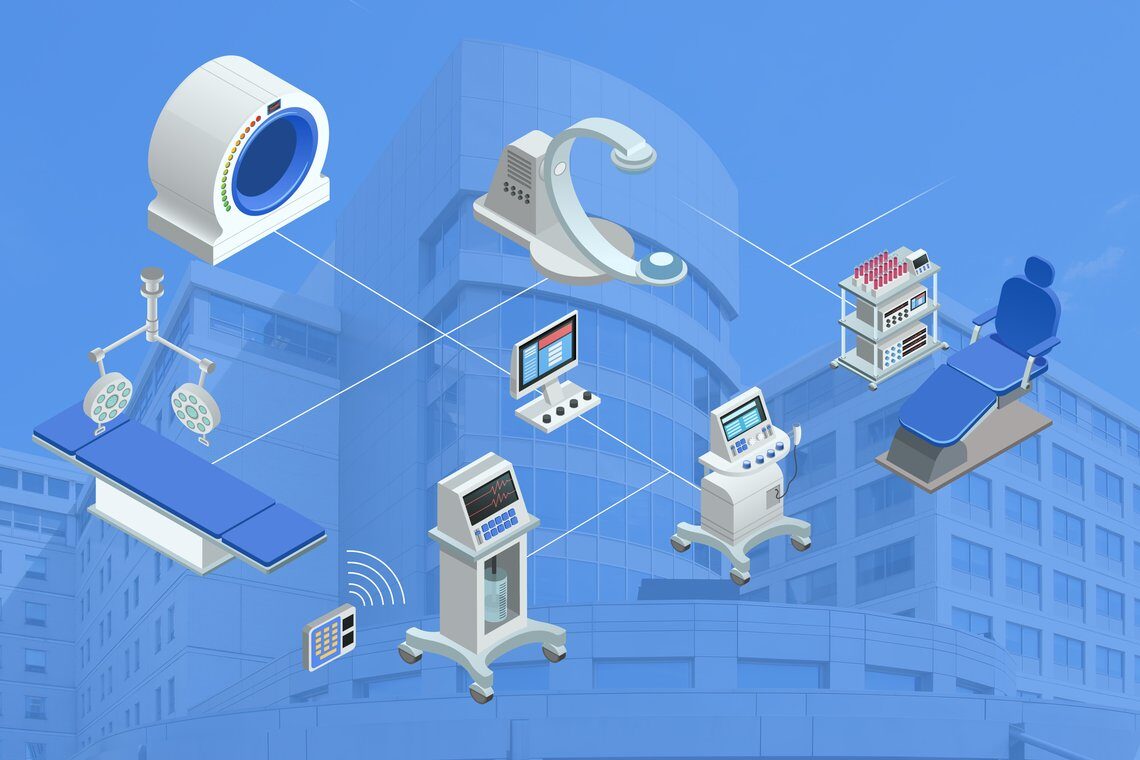
5- Medical Imaging Centers 6- Appointment of medical imaging centers 7- Medical imaging centers over 100 kg in Iran Is medical imaging harmful to the human body? Medical Imaging for Pregnant Women 10- Medical imaging equipment 11- Medical imaging images format 12- How to store images in medical imaging [caption id="attachment_4574" align="aligncenter" width="1140"]Medical Imaging Medical Imaging[/caption]

1- Introduction to Biomedical Engineering

Engineering is an innovative discipline or field, biomedical engineering or biomedical engineering is also one of the most innovative engineering disciplines with very attractive innovations that focus on developments that improve human health and healthcare at all levels. This field is known to be one of the most attractive academic disciplines in Iran and the world. Biomedical Engineering describes the application of engineering problem-solving principles and techniques in biology and medicine. This field of engineering can be divided into different tendencies according to the field of activity، following are the main tendencies of this field:
  • Bioelectric: Bioelectric, Bioelectric, Electronic or Bioelectric Engineering
  • Biomechanics Biomechanics Biomechanics
  • Bioinformatics: Bioinformatics and Bioinformatics
  • Biomaterials: Biomaterials Engineering
  • "Clinical Engineering" Clinical Biomedical Engineering
  • "Tissue Engineering" Tissue Engineering
Inspired by the engineering disciplines and principles of medical and biological organs and merging them together, biomedical engineers are trying to influence human health, and it is because of this, that medical engineers integrate various aspects of engineering such as mechanical engineering, electrical engineering, chemical engineering, materials science, chemistry, mathematics, and computer science, etc. with human biology in biomedical engineering to improve human health. The output of these compounds could be a prosthetic limb or advanced prosthesis، a medical device، a diagnostic device or a breakthrough in identifying proteins within cells. The disciplines and tendencies of biomedical engineering are so widespread that many sub-disciplines of this mother field can be named: Including the design and development of medical equipment, medical imaging, medical signal processing, medical image processing, orthopedic implants, tissue and stem cell engineering, and clinical engineering, medical devices in the field of treatment are just a few of the main uses of biomedical engineering in human health.

2. What is Medical Imaging? How many medical scans around the world؟

Medical imaging is one of the branches of biomedical engineering. Medical imaging is a technique and process of imaging the interior of the body for clinical analysis and medical interventions as well as the representation of the function of certain organs or tissues (physiology). Medical imaging can be used to detect internal structures hidden by skin and bones, as well as to diagnose and treat the disease. Medical imaging also creates a database of normal anatomy and physiology to enable the identification of abnormalities. Medical imaging can be classified as a discipline and in its broadest sense, a part of biological imaging, which includes subfields such as radiology (which uses X-ray radiography imaging technologies), magnetic resonance imaging or MRI, ultrasound, nuclear medicine imaging, endoscopy, elastography, thermal imaging, thermomechanics, medical imaging and so on. Regarding the application of medical imaging and its multiplicity around the world, the following statistics can be provided: In 2010, 5 billion medical imaging were performed worldwide. 42.7 million medical imaging were reported in the UK in the year ending March 2018. There were 42.1 million scans in the UK last year. According to the Health Organization of the Americas, two-thirds of the world's population does not have access to diagnostic imaging. According to the same organization, between 70 and 80 percent of diagnostic problems can be resolved with the initial use of X-rays or ultrasounds. According to the World Health Organization and the Inter-American Health Organization, in developed countries, there are 1,700 radiologic scans per 1,000 people per year, compared to 400 scans in Latin America and the Caribbean, and 30 scans per 1,000 people per year in developed countries. Medical imaging is usually a set of techniques that are used noninvasively (the term "noninvasive" to indicate a procedure in which no device is inserted into the patient's body, which is used in most imaging procedures) produces images of the internal aspect of the body. In most medical imaging methods، images can be made using mathematical inverse problem solving techniques.

3- Medical imaging techniques

Medical imaging allows doctors to see inside the human body as well as various tissues from the outside. Today, medical imaging is an integral part of medical science. Before medical imaging was used, diagnosing injuries and diseases was often difficult or impossible. Medical imaging technologies and techniques can range from the first X-ray imaging in 1896 to the complex imaging techniques of today by modern imaging devices and methods with various imaging technologies. In general, the basic methods of medical imaging that help radiologists and physicians diagnose and treat diseases can be named as follows: X-ray imaging, computed tomography or CT scan, magnetic resonance imaging or MRI, nuclear medicine imaging or molecular imaging, positron emission tomography or PET scan and ultrasound. Difference between different methods of medical imaging

4. Medical imaging devices and systems

As a field of scientific research, medical imaging forms a subfield of biomedical engineering, medical physics, or medicine depending on the field being investigated. Research and development in the fields of medical imaging devices and systems, instrumentation, image acquisition (e.g. radiography, MRI and other modalities of medical imaging), modeling and quantification in medical engineering, medical physics and computer science, and research on the application and interpretation of medical images from subfields of medical imaging. Many of the techniques developed for medical imaging also have scientific and industrial applications. Today, medical imaging devices have benefited from a wide range. These devices and imaging systems can be used to radiological, MRI, nuclear medicine, ultrasound or ultrasound, etc. And he divided. In general, the number of medical imaging centers around the world is palpable. By the early 1980s, there were a total of 12 MRI machines in the world, so everyone who worked with MRI imaging knew each other. Today, there are more than 50,000 MRI machines worldwide. Currently, about 5,000 MRI machines are sold worldwide every year. Japan has the highest per capita MRI unit, followed by Switzerland, the USA and Germany. The Chinese market is huge and dynamic, but it is difficult to obtain accurate information. Data from countries with liberal, unregulated health systems such as the United States fluctuates widely. Those with government-supervised or regulated health systems like Canada or France know exactly how many MRI machines work, trying to control the commercial aspect of MRI centers. In 2019, there were nearly 12,000 MRI machines in operation in the U.S., with about 40 MRI units serving patients per one million people. There are about 6,500 units of MRI machines in operation in Japan, with about 52 units serving patients per million people, according to the country's population. In Germany, there are about 2,800 units of MRI machines in operation, with about 35 MRIs serving patients per one million people. It should be noted that Japan, the United States and Germany have the highest rates of installation of MRI machines among the countries in the world. According to the surveys and statistics of the General Administration of Medical Devices of Iran, about 500 MRI machines are operating in Iran, which for one million people there are six MRI machines available to patients.

The number of CT scans performed in the world is approximate

Regarding the number of CT scan devices in different countries of the world, the following statistics can be provided: CT scan is a vital medical technology among imaging devices used in diagnosing and monitoring various diseases. CT scans use X-ray technology to create images of bones, veins and other internal organs of the body. In 2019, Japan had the highest number of CT scans per capita in the world per capita population of countries with about 112 CT scanners per million. Australia was the second largest country with 71 CT scanners per million after Japan in 2019. Based on the figures available to the few countries with the highest CT scanning and MRI devices in the world, it can be concluded that the largest markets for imaging equipment are in the United States, followed by Europe, which has bought almost a quarter of all units. According to the World Health Organization and healthcare organizations, 12 to 15 MRI machines per one million people fully meet people's medical needs. However, the density of diagnostic imaging units can be one of the criteria for determining the quality of a country's health care infrastructure. According to global statistics, after an average of seven years, many medical capital machinery and devices have to be replaced or refurbished. Therefore، the total number of devices sold does not represent the number of devices in operation or in use. A very important point to consider is the lack of overuse of various medical imaging methods so that in countries where the markets for medical imaging devices are oversaturated, for example in the United States, Japan, Korea, Switzerland and Germany, there is a risk of overuse of MRI and other medical imaging modalities. According to the OECD، between 1997 and 2006، the number of examinations in the United States increased dramatically while the incidence of diseases remained constant. In addition, in cases where payment incentives allow companies and doctors to benefit from referrals and the likelihood of overuse increases. Therefore, excessive and unnecessary use of medical imaging modalities in some cases also leads to a significant increase in side effects.